

My family is Persian, and Persian food has been part of my kitchen my entire life. If you’re new to Persian cooking, don’t worry, there’s a lot more to it than kabobs and rice, and you don’t need a pantry full of unfamiliar ingredients to get started.

What is Persian food?
Whenever I introduce friends to Persian food, they are always surprised by what I put before them. They smell the saffron and rosewater. They taste the herbs and sumac. They see the bright colors upon their plate.
Persian food isn’t known for the chile heat found in some other cuisines, but it uses all kinds of aromatic spices and fresh herbs.
Each one of my children has personal favorite dish. My oldest son is all about koobideh kabob and tahchin (saffron baked rice). My middle son adores khoresht karafs (celery stew). My daughter requests lubia polo (green bean rice) with my oven chicken kabob all the time.
I love making Persian food the traditional way, but I’m also happy to put my own spin on recipes and try modern cooking techniques.
There’s something for everyone, and I think you’ll fall in love with Persian food after your first bite!

Persian Pantry Essentials
If you’re new to Persian cooking, some of the ingredients may seem unfamiliar or difficult to find. Don’t worry! You don’t need to buy everything at once. With a few pantry staples, you can make a wide variety of Persian dishes, and many of these ingredients will last for months when stored properly.
Persian pantry staples to start with:
- Long-grain basmati rice: The foundation of many Persian meals, served plain with stews and kabobs or cooked with herbs, vegetables, and other ingredients.
- Saffron threads: Used to add color, aroma, and distinctive flavor to rice, stews, and desserts.
- Turmeric: A common spice used in many savory Persian dishes.
- Dried limes: Adds a distinct tangy flavor to classic Persian stews.
- Yellow split peas: An important ingredient in Persianstews and soups.
- Dried herbs: Parsley, mint, and fenugreek are useful for making traditional soups, stews, and other dishes.
- Pomegranate molasses: Adds a sweet-tart flavor to many Persian dishes.
- Rosewater: Used to add floral notes to sweets, desserts, and some drinks.
You can find many other useful Persian cooking ingredients at your regular grocery store, too:
- Tomato paste and canned tomatoes
- Walnuts and pistachios
- Lentils and dried beans
You can build your pantry over time as you try new recipes. My ingredient guides below will help you learn more about the spices, herbs, and other staples used in Persian cooking.
Persian Spices and Herbs
Common Persian Spices and Seasonings

This post contains some affiliate links for your convenience (which means if you make a purchase after clicking a link I will earn a small commission but it won’t cost you a penny more)! Read my full disclosure policy
Persian cooking uses a variety of spices and seasonings to add flavor, aroma, and color without overpowering a dish. Some are everyday staples, while others are used for specific recipes. Here are some you’ll find in Persian kitchens:
- Turmeric (زردچوبه zard chūbeh): A staple in many savory dishes, turmeric adds earthy flavor and a warm golden color.
- Saffron (زعفران zafarān): Prized for its distinctive aroma, flavor, and golden color, saffron is used in rice dishes, stews, kabobs, and desserts. Learn more in my guide to cooking with saffron.
- Cinnamon (دار چین dār chīn): Adds warmth to both sweet and savory dishes like stews and rice dishes.
- Sumac (سماق somāk): A tangy seasoning often sprinkled over kabobs and other savory dishes.
- Cardamom (هل hel): A fragrant spice used especially in sweets, desserts, and some drinks.
- Cumin (زیره zīreh): An earthy, warm spice used in some savory dishes.
- Persian spice blend (ادویه advīeh): A blend of spices whose ingredients vary by recipe and family. It can add warmth and fragrance to rice, stews, and other dishes.
- Dried lime (لیمو عمانی limū āmānī): These add a distinctive tangy flavor to Persian stews.
- Rosewater (گلاب golāb): A fragrant floral ingredient used in Persian desserts, sweets, and drinks.
- Persian hogwood (گلپر golpar): An aromatic seasoning with a distinctive flavor, often sprinkled over pomegranate and certain beans or other savory foods. Learn more about golpar and pomegranate.
- Fennel seed (رازیانه rāz yāneh): Has a sweet, anise-like flavor and is used in some Persian recipes.
Fresh and Dried Herbs
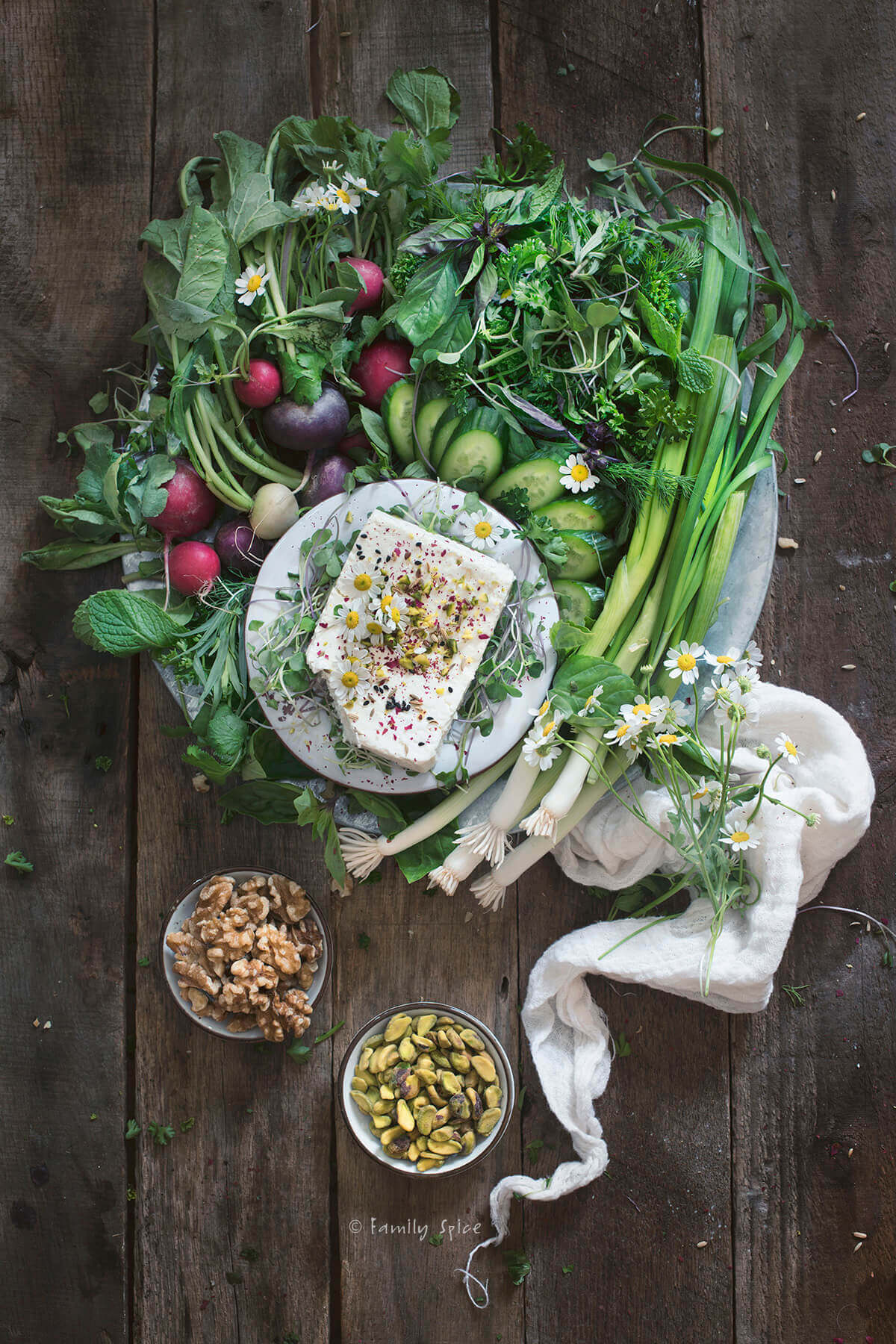
Persian cooking uses plenty of fresh and dried herbs. We add them to soups, stews, rice dishes, and more, but we also enjoy them fresh alongside our meals.
A platter of fresh herbs, called sabzi khordan, is a staple at many Persian meals. Serve it with some lavash and feta cheese, and you’ve got one of my favorite ways to enjoy fresh herbs. Heaven!
Some common herbs used in Persian cooking include:
- Basil (ریحان reyhān)
- Mint (نعناع na’nā)
- Tarragon (ترخون tarkhūn)
- Cilantro (گشنیز gishnīz)
- Parsley (جعفری ja’farī)
- Green onions (پیازچه piyāzcheh)
- Dill (شوید shevid)
- Watercress (شاهی shāhī)
- Fenugreek (شنبلیله shanbalīleh)
The Sour Flavors of Persian Cooking

Sour flavors play an important role in Persian cooking. Lemon juice, dried limes, sour fruits, and other tangy ingredients add brightness to savory dishes, especially stews. Some Persian dishes also balance sweet and sour flavors using ingredients like pomegranate concentrate, sour cherries, and dried plums.
Some of these ingredients might be unfamiliar, but don’t knock them ’til you try them! Persians also love their pickles, known as torshi. From pickled cucumbers to colorful mixed vegetables, torshi is often served alongside a meal.
Here are some ingredients used to add sour flavor to Persian dishes:
- Lemon juice: An easy way to brighten soups, stews, and other savory dishes.
- Vinegar: Used instead of lemon juice in some dishes and in pickling vegetables.
- Dried lime (لیمو عمانی limū āmānī): Used whole or powder to add a distinctive tangy flavor to stews.
- Sour grapes: Enjoyed fresh or pickled, or used in powdered form to add tartness to dishes. (pictured above)
- Pomegranate concentrate: Adds a tart, fruity flavor to certain Persian dishes. Not to be confused with pomegranate molasses which contains sugar.
- Sour cherries: Used in dishes like albaloo polo, Persian sour cherry rice.
- Sour plums (gojeh sabz گوجه سبز): Tart green plums enjoyed fresh, pickled or used in seasonal dishes.
- Green almonds (چغاله بادام chaghaleh badoom): Young, unripe almonds with a crisp texture and tangy flavor. When very young and small, the entire pod is edible.
- Bitter orange (نَارَنْج narenj): A fragrant citrus fruit with a tart, bitter flavor.
- Barberries (زرشک zereshk): Small, bright red berries with a sharp, tangy flavor, often used in Persian rice dishes.
- Persian yogurt: Thick, creamy yogurt with a pleasantly tangy flavor, served alongside meals or used in dips and other dishes.
- Kashk: A fermented dairy product with a tangy, savory flavor, commonly used in dishes like kashke bademjan and ash reshteh.
- Tamarind paste: A tart, fruity paste used in some Persian dishes, particularly those with southern Iranian influences.
Persian rice recipes

Rice is a staple of Persian cuisine, served alongside kabobs and stews or as the star of the meal. We cook it with saffron, herbs, vegetables, meat, and dried fruits. We even add rice to soups and stuffed grape leaves, and turn it into a sweet saffron rice pudding called shole zard.
Some Persian rice dishes are reserved for holidays and special occasions. For example, shirin polo, a sweet rice dish made with ingredients such as dried fruit and nuts, is often served at Persian weddings (sofreh aghd).
Long-grain basmati rice is commonly used in Persian cooking. Plain white rice, called chelo, is often served with kabobs and stews and may be topped with saffron-infused rice for its signature golden color.
Other rice dishes, called polo, combine rice with ingredients like herbs, vegetables, legumes, meat, or dried fruit. These flavorful dishes can be served as a complete meal or as part of a larger spread for family gatherings and parties.
You can also make Persian rice with brown basmati rice, although the texture differs from white basmati. Brown rice generally has a chewier texture, so results may vary when substituting it in traditional Persian rice recipes.
Persian rice can be prepared in a pot on the stovetop or with a rice cooker that has the right settings. One of the best parts is the crispy crust at the bottom of the pot, called tahdig, that we all fight over. Everyone has their favorite! It can be made with rice, potatoes, sliced onions, or bread such as lavash or tortillas.

Persian stews

Persian stews, known as khoresht, are usually served over or alongside rice. They come in all kinds of flavors, from herb-packed stews to tomato-based dishes and sweet-and-sour combinations. Many feature vegetables like eggplant, green beans, okra, or squash, along with fragrant herbs and spices.
Beef and lamb are common choices for Persian stews, whether cooked as shanks or bite-sized pieces. Chicken and duck are used in some recipes, too. Many stews can also be made vegetarian, with legumes like yellow split peas, lentils, or beans adding substance and protein.
From the herb-filled ghormeh sabzi to the sweet-and-sour fesenjoon, Persian stews offer a delicious range of flavors. You can explore my Persian stew recipes to find a new family favorite!
Persian kebab recipes

Persian kabobs are a favorite in our family and a classic part of Persian cooking. We skewer everything from beef and lamb to chicken, fish, and vegetables. Think of kabob as our version of barbecue! The flavor comes from the ingredients, preparation, and marinades.
Marinades vary depending on the meat. Chicken marinade for joojeh kabob is different from the marinade for kabob barg, made with filet mignon. And Persian ground beef kabob, called kabob koobideh, doesn’t use a marinade.
Traditional Persian kebabs are grilled directly over hot coals, with the skewers resting across the grill rather than the meat sitting on a grate. Wide metal skewers help keep the meat in place while it cooks, so they’re worth having if you plan to make kabob at home.
During the week, when my family craves kabob but we don’t have the time (or patience!) to skewer and grill, I turn to my oven-baked and air fryer kabob recipes. They’re convenient ways to enjoy these Persian favorites without firing up the grill.
Persian dessert recipes

Persian desserts are full of fragrant flavors, with ingredients like saffron, cardamom, and rosewater adding something special to sweets and treats.
From creamy saffron rice pudding (shole zard) and rosewater cake to Persian baklava, saffron cookies, and delicate Persian rosettes (nan panjereh), there’s plenty to explore!
And one thing you’ll almost always find in a Persian home when guests come over? Fresh fruit! I keep a bowl of seasonal fruit on my counter, and yes, that includes Persian cucumbers. They’re perfect for snacking, even after dessert.
Persian drinks

Persian New Year (Nowruz)

The first day of spring marks the Persian New Year, known as Nowruz (also spelled Norouz or Noruz). Celebrated for more than 3,000 years, Nowruz has roots in Persian culture and is observed by people across Iran and many other countries and communities.
Food plays an important role in Nowruz celebrations, from special rice dishes and herb-filled recipes to sweets shared with family and friends. Want to learn more about the holiday and its traditions? Read my guide to Persian New Year and Nowruz foods.
Ready to start cooking? Explore all my Persian recipes to find family favorites, traditional dishes, and modern twists on Persian cooking.
PS If you try this recipe, why not leave a star rating in the recipe card right below and/or a review in the comment section further down the page? I always appreciate your feedback.
You can also follow me on Pinterest, Facebook or Instagram. Sign up for my eMail list, too!
Written by Laura Bashar
Hi, I’m Laura, a certified professional cook and cookbook author living in San Diego. I have been sharing my family’s favorite recipes inspired from all over the world since 2008. Let’s cook up something fun!