




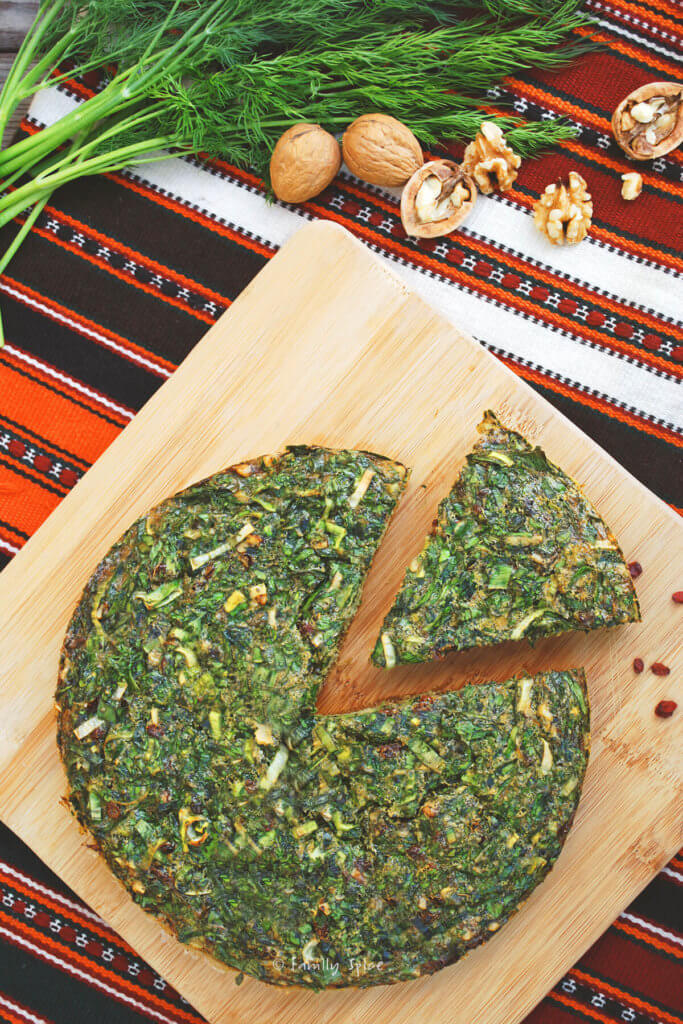
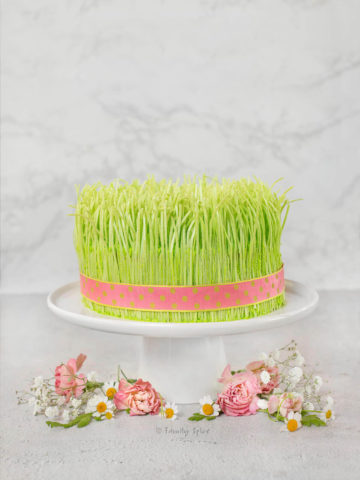
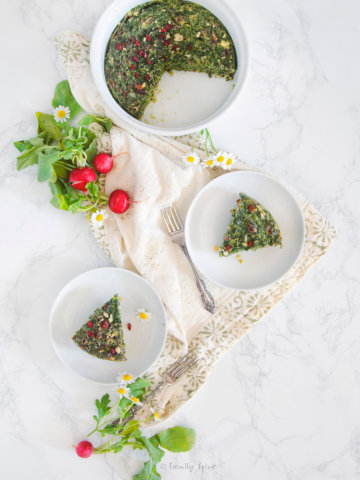
This kookoo sabzi (kuku sabzi) is an aromatic quiche filled with six different herbs and greens. It’s a staple dish to celebrate the first day of Spring and the Persian New Year (Nowruz).
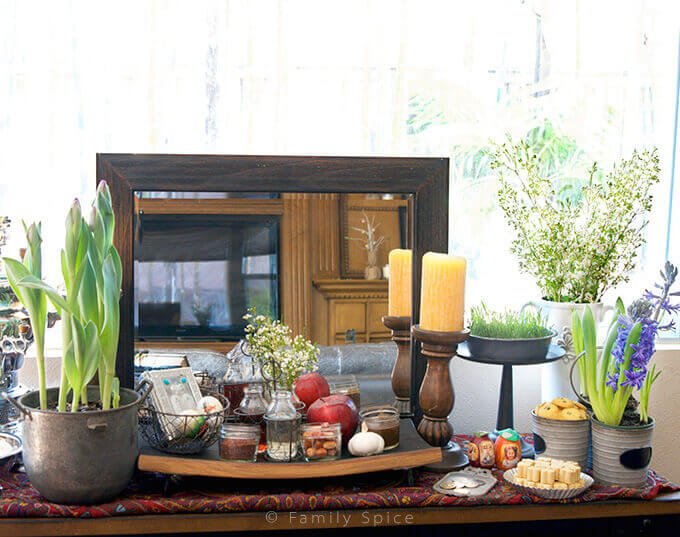
Every year, the approach of spring and Nowruz (Persian New Year) brings a smile to my face. It not only reminds me that winter is almost over, but it also delivers all the beautiful traditions I love about this holiday.
The first day of Spring falls on March 20th, the spring equinox. And the first day on the Iranian calendar (Nowruz/Norouz/Noruz) falls on the the first day of spring. Along with the traditions of the sofreh haft sin and the fire jumps on Chahr-Shambeh Souri, there are certain foods we Persians eat to celebrate.
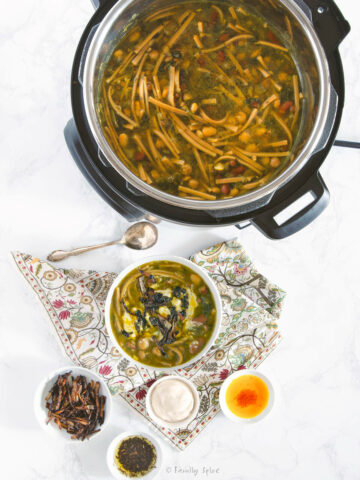
The main course is typically Sabzi Polo Mahi, herb rice with fish, where fish symbolizes life and good luck. Ash-e Reshteh, a hearty soup cooked with beans, fresh herbs and noodles is also served.
Today I am sharing another nowruz recipe, kookoo sabzi. It is believed that eating kookoo sabzi will bring prosperity and happiness in the year to come.
Jump to:
Laura says :
Why this recipe works
- Customize it: Just enough eggs are used to bind it all together. I add a couple more eggs than many other traditional recipes for kookoo sabzi because of personal preference.
- Easy peasy: You just whip up everything in a bowl and bake it in a baking dish. Some people prefer to fry it in a pan and you can also make kuku sabzi in the instant pot.
- Flavorful: The fresh herbs take center stage in kookoo sabzi, not the eggs. Some people use only dried herbs, but nothing beats the flavor of fresh. I also like to add fresh spinach to my kookoo sabzi for a nutritional punch!
- Texture: Persian kuku is like a frittata, but with less eggs. It is not as light and fluffy like a quiche, nor is there any other dairy mixed into it.
- How to serve: The dish is full of flavor and makes a wonderful dish all year long. We enjoy kuku for breakfast, a light lunch and even a snack.

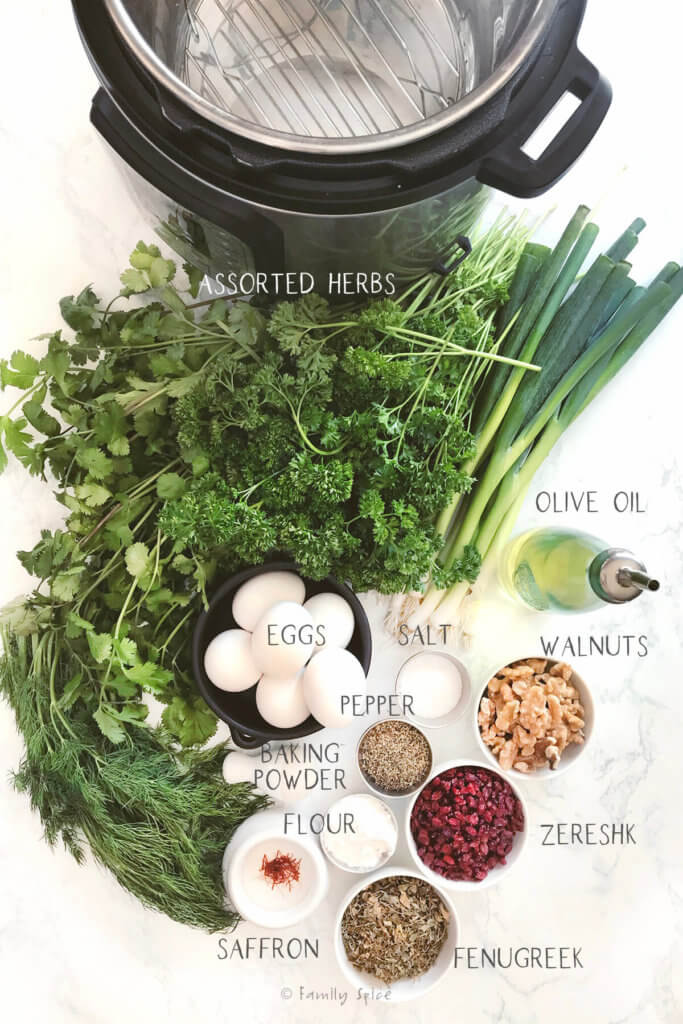
Ingredients you need
This post contains some affiliate links for your convenience (which means if you make a purchase after clicking a link I will earn a small commission but it won’t cost you a penny more)! Read my full disclosure policy
- Saffron: When using saffron, choose long strands that are crimson in color for best quality. Powdered saffron can have food coloring or turmeric mixed in and is not as fragrant as real saffron. Saffron should be aromatic even before steeping, so let your nose tell you if you have quality saffron or not.
- Leek: You can substitute leek with a bundle of green onions.
- Fresh herbs: I prefer the flavor that comes from using fresh parsley, cilantro and dill. Some people do purchase dried herbs.
- Spinach: I have used both fresh and frozen spinach. If using frozen, be sure to thaw it completely and squeeze out the excess water.
- Dried fenugreek: I don’t usually find fresh fenugreek so I use dried fenugreek.
- Walnuts: These add crunch to the kuku, but you can omit them if you have a nut allergy.
- Dried barberries (zereshk): Barberries are small sour berries. You can substitute them with dried cranberries if you cannot find them in middle eastern stores or order online. You can learn more about zereshk (barberries) here.
- Eggs: I use large eggs in this recipe.
- Pantry items: All purpose flour, baking soda, extra virgin olive oil, salt and pepper.
Step-by-step directions

- Bloom the saffron. Grind your saffron in a mortar and pestle then steep in hot water.
- Combine veggies. In a large bowl stir together vegetables and herbs with walnuts, barberries, flour, baking soda, olive oil, salt and pepper.
- Add eggs. In a separate bowl, whisk together eggs with the saffron water. Stir eggs into the vegetable mix.
- Bake. Spray 9-inch ceramic pie dish with cooking spray. Pour egg mixture and bake until a toothpick stuck in the center comes out clean.
Want to save this recipe?
Recipe tips and FAQs
Some people like to fry the herbs before adding in the eggs, which results in a darker kookoo. I don’t think it is necessary. I think the herbs have a more vibrant flavor without the frying it to a near burnt state. And it keeps the recipe simple!
Not only have I mixed spinach in my kuku sabzi, but I have also made it with Swiss chard and kale. Click here for the my kookoo sabzi with Swiss chard recipe. Other kookoo recipes feature potatoes (kookoo sibzamini), onions and even string beans.
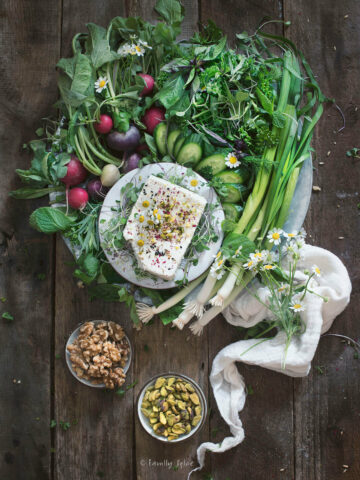
For Nowruz, we serve kuku sabzi with the main meal. But, you can serve kuku as an appetizer, too. I like to enjoy a slice of kuku sabzi with my morning tea (this is my FAVORITE Persian tea) for breakfast. You can also make a sandwich with it and wrap it in some lavash (flat bread) with a bit of feta cheese and some radishes.
You can also serve kuku sabzi with plain yogurt or even mast o khiar (yogurt with cucumbers). Whether you are enjoying this dish to celebrate spring or just to enjoy the bounty of fresh herbs, there is no wrong way to enjoy kuku sabzi!
Storing/Freezing Instructions
TO STORE: Store any leftover kuku in an airtight container and refrigerate for up to 4 days.
TO FREEZE: You can also freeze leftovers. Transfer to a resealable bag or freezer safe container and freeze for up to 4 months.

My grandmother always made her kookoo in a pan on her stove. My mother-in-law still makes her kookoo this way, too. You press the kuku sabzi mixture into a greased pan and cook until the bottom is browned and set. Then, like a quesadilla, you need to transfer the kookoo to a plate in order to flip it over and brown the other side. I’m a no fuss kinda cook and prefer baking my kookoo in a 9-inch pie dish in the oven. Whichever method you choose, you will create a wonderful dish!
Want to learn more about Nowruz and the Persian New Year? I have put together a Nowruz ebook that has all the history, traditions and recipes of Nowruz, in a beautifully photographed ebook. And it’s only $1.99!


Persian Herb Quiche | Kookoo Sabzi (kuku sabzi)
Ingredients
- ¼ teaspoon crushed saffron
- 1 tablespoon hot water
- 1 small leek rinsed and chopped
- 1 cup chopped parsley (approximately 1 bunch)
- ¼ cup chopped cilantro
- ¼ cup chopped dill
- ½ cup chopped spinach
- 2 teaspoon dried fenugreek
- ¼ cup chopped walnuts
- 2 tablespoon dried barberries zereshk*
- 1 tablespoon all purpose flour
- ½ teaspoon baking soda
- 2 tablespoon extra virgin olive oil
- 1 teaspoon salt
- ¼ teaspoon ground black pepper
- 8 large eggs

Instructions
- Preheat oven to 350ºF and adjust rack to upper-middle position.
- In a small bowl combine saffron and hot water and let steep.
- In a large bowl stir together vegetables and herbs with walnuts, barberries, flour, baking soda, olive oil, salt and pepper.
- In a separate bowl, whisk together eggs with the saffron water. Stir eggs into the vegetable mix.
- Spray 9-inch ceramic pie dish with cooking spray. Pour egg mixture into prepared pie dish.
- Bake for 40 minutes, or until a toothpick stuck in the center comes out clean.
- Let it cool for 15 minutes prior to serving. Or cool completely and serve at room temperature.
Notes
Nutrition
Nutrition Disclaimer
Nutritional information is an estimate provided to you as a courtesy. You should calculate the actual nutritional information with the products and brands you are using with your preferred nutritional calculator.
PS If you try this recipe, why not leave a star rating in the recipe card right below and/or a review in the comment section further down the page? I always appreciate your feedback.
You can also follow me on Pinterest, Facebook or Instagram. Sign up for my eMail list, too!
Written by Laura Bashar
Hi, I’m Laura, a certified professional cook and cookbook author living in San Diego. I have been sharing my family’s favorite recipes inspired from all over the world since 2008. Let’s cook up something fun!

Excellent recipe – followed it exactly, to make your life easier, just put all the herbs, spinach and leek into a food processor and blitz.
I’m so glad you liked the kuku! I hate cleaning my food processor, but yes, you can totally use that.
Thank you for sharing-
Laura
I think I’d bake this, too. Neat dish! And fun read — thanks.
Happy Persian new year Laura! This dish looks so mouthwatering. I love all of the new foods you are introducing me too. Everything Persian I've ever tasted has always been amazing. Thank you for being a part of March's YBR.
This kookoo sabzi looks so good!
Eide shoma mobarak!
"Sabz" is green in farsi. "Sabzi" is for the greens, or herbs, we like to eat raw or to cook. Farsi has a lot of words in Arabic and French, too. I didn't know sabzi is also in Hindi.
Sabzi is a word that Indians use for vegetable side dishes. I am always surprised by how many words Hindi and Persian share.
The Kookoo-yeh Sabzi sounds wonderful. I am definitely going to have to make this one day…
Sabzi is a Farsi word my dear, and its shared between Persian language and Indian because at some point the Persian Empire expanded all the way to China and covered most of India,,, It is not an original Hindu word!!!
Relax. It’s not a competition. No one said it was a Sanskrit word. It’s clearly Persian and anyone from the region knows the history. Get off your high horse.