

Learn what saffron is, why it’s so expensive, how to choose and store it, and how to use this prized spice in your cooking.

What is saffron, and why is it so special? This prized spice can seem intimidating, especially with its hefty price tag. Here’s what you need to know about where saffron comes from, how to choose and store it, how to use it in cooking, and which saffron recipes to try.
Saffron always makes me think of Persian bazaars filled with dates, nuts, and tea. Those deep-red threads release a beautiful golden-yellow color when steeped in water, along with a distinctive aroma that makes even a small pinch special.
For me, saffron is also tied to family traditions and Persian dishes that have been passed down through generations. I hope my children will carry on those traditions, too. In this guide, I’ll share what I’ve learned about buying, storing, and cooking with this treasured spice.
What Is Saffron?
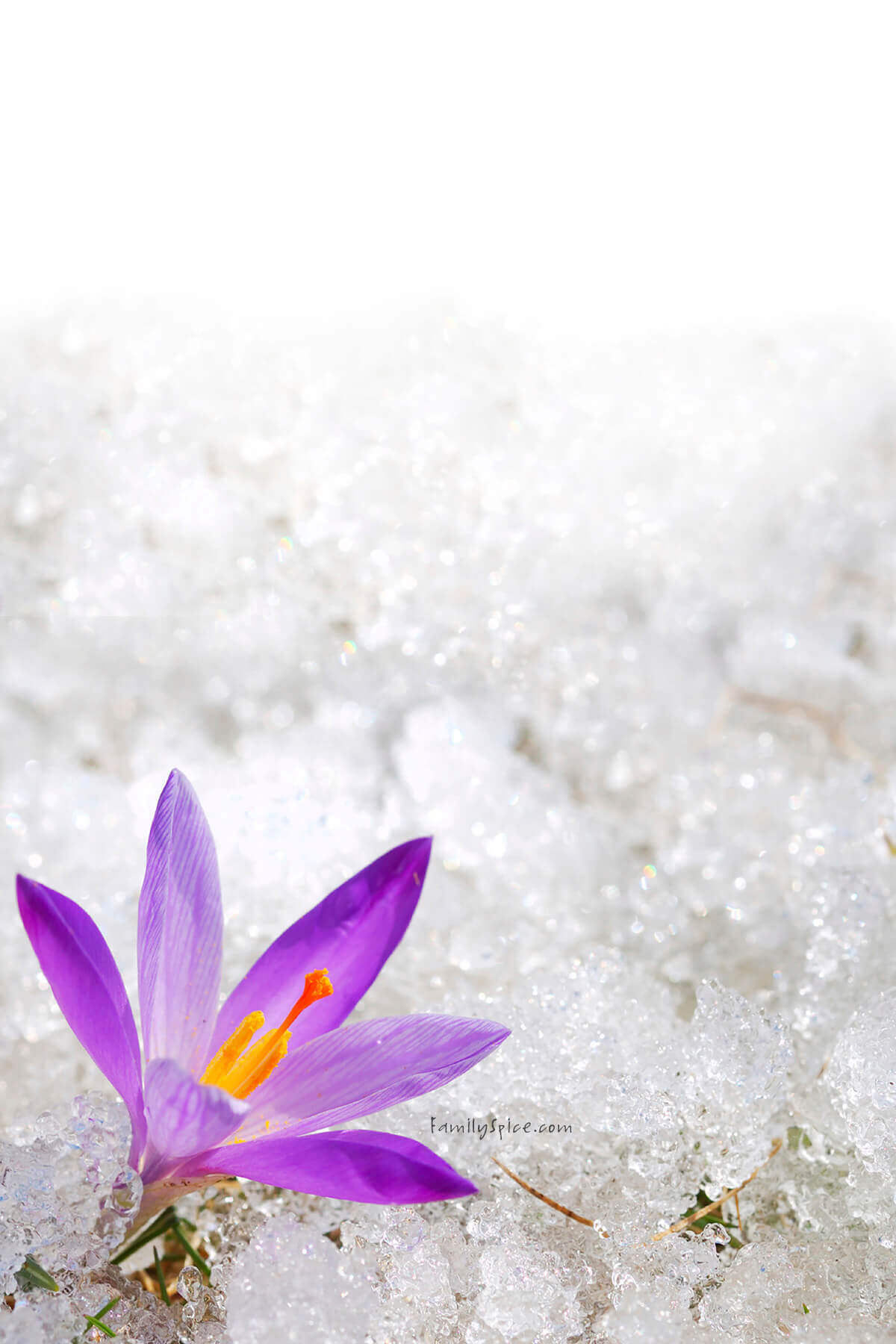
Saffron comes from the Crocus sativus flower. Each flower produces three red stigmas, which are carefully harvested and dried to create the saffron threads used in cooking. The plant originated in the region around the eastern Mediterranean and Southwest Asia, and saffron has a long history in Persian, Middle Eastern, and European cuisines.
Saffron quality varies depending on factors such as the growing region, harvest, processing, and storage. When buying saffron threads, look for deep-red strands with a strong, distinctive aroma. Avoid products with lots of pale yellow plant material mixed in, and buy from a reputable seller who identifies the product clearly.
Why Is Saffron So Expensive?
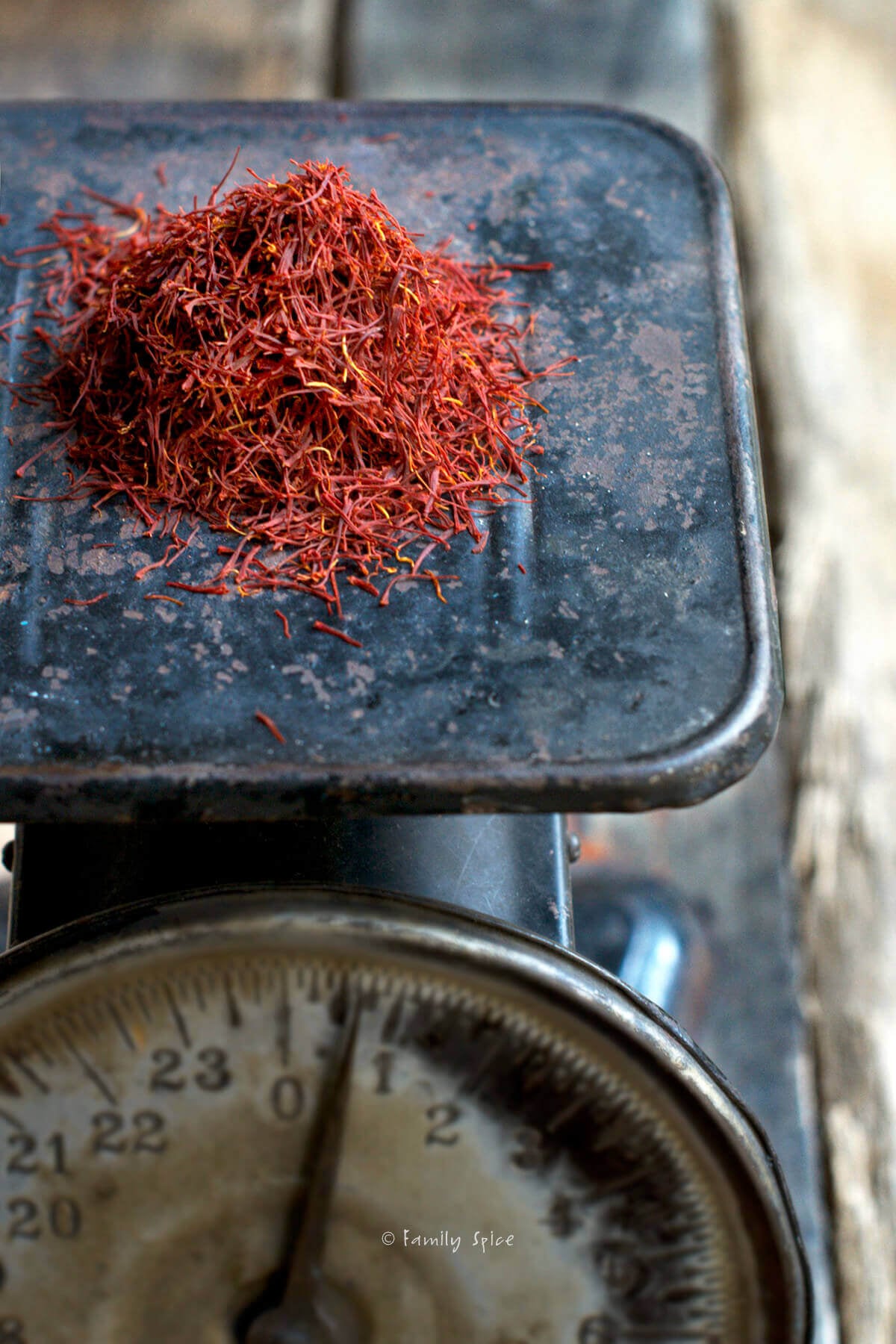
Why does saffron cost so much? The answer comes down to how it’s grown and harvested.
Saffron crocuses need suitable growing conditions, and the delicate red stigmas must be picked by hand. Each flower produces just three stigmas, which are separated and dried before they’re ready to sell.
It takes tens of thousands of flowers to produce a pound of dried saffron. You’ll often see estimates of around 75,000 flowers per pound, although the exact number varies with the size of the harvest and how the saffron is processed.
All that careful handwork adds up, which is why saffron is one of the world’s most expensive spices. The good news? You usually need only a small pinch to add its distinctive flavor, aroma, and golden color to a dish.
Ground Saffron Versus Saffron Threads
Saffron is sold as whole threads and as a ground powder. Ground saffron is convenient, but it can be harder to judge its quality by sight. Some products may contain other ingredients or less expensive substitutes, so buy from a trusted source.
I prefer whole saffron threads because I can see what I’m getting. Look for deep-red threads with a strong aroma, rather than a product containing lots of yellow or pale plant material. Color alone doesn’t guarantee quality, but the appearance, fragrance, freshness, and reputation of the seller can all help you make a better choice.
You may also come across saffron water or liquid saffron products. These can be convenient, but check the ingredient list to see whether the product contains only saffron and water or includes added colorants or other ingredients.
My recommendation? When possible, buy whole saffron threads from a reputable seller and grind or crush only what you need. That makes it easier to inspect the spice and control how much you use.
This post contains some affiliate links for your convenience (which means if you make a purchase after clicking a link I will earn a small commission but it won’t cost you a penny more)! Read my full disclosure policy

Laura’s Saffron Pick:
I now longer sell saffron, but I’ve purchased and been happy with this brand of saffron on Amazon. As always, check the current product details and ingredient information before buying.
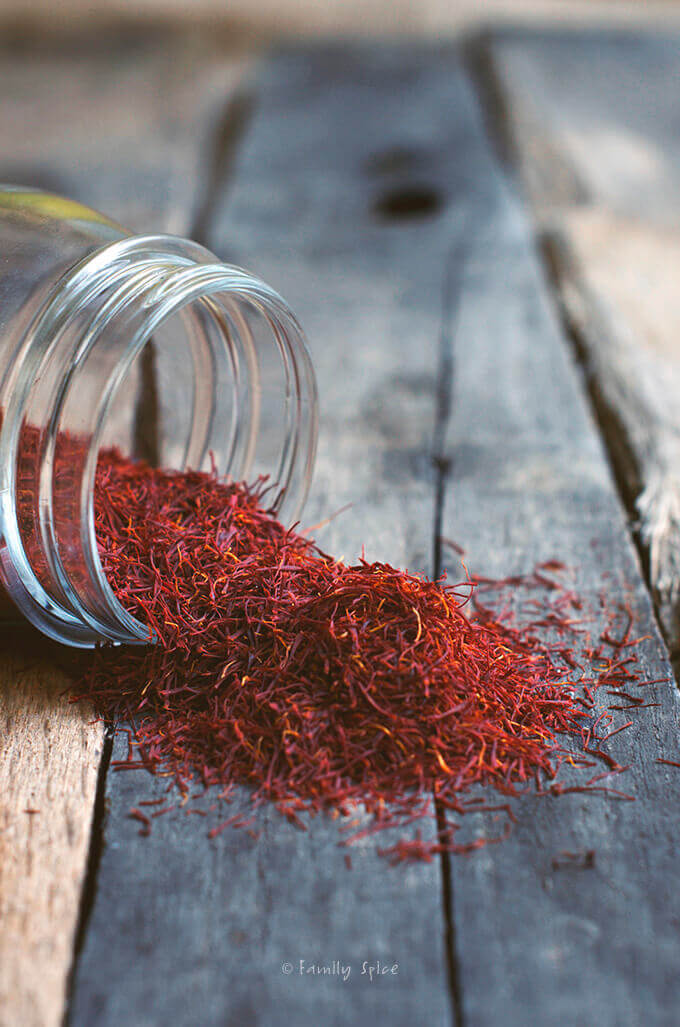
Store saffron threads in a tightly sealed container in a cool, dark, dry place. I keep mine in my pantry, away from heat, moisture, and direct sunlight. Since saffron is expensive and you usually use only a little at a time, keeping it protected helps preserve its aroma.
Want to save this recipe?
How To Store Saffron
In my Persian family, we also prepare saffron water ahead of time. My mother-in-law crushes saffron, mixes it with warm water, and freezes the concentrated infusion in a small container.
When she needs saffron for cooking, she takes out a little of the prepared infusion, drops in a little hot water to melt some of the saffron liquid and adds this to the dish. It’s a handy shortcut when you cook with saffron often, as many Persian cooks do.
If you try this method, freeze the infusion in small portions so you can take out only what you need. For the best flavor, avoid repeatedly thawing and refreezing the entire batch.
How To Use Saffron: Grinding and Blooming

I grind my saffron with a mortar and pestle whenever I need it. This way, I only grind what I need, leaving the remaining threads intact to help preserve their flavor and aroma.
Blooming saffron simply means steeping the ground saffron in warm-hot water to release its color and flavor. The process is easy:
- Grind or crush the saffron. Use a mortar and pestle to crush a small pinch of threads into a coarse powder. This helps release the color and flavor.
- Bloom the saffron. Add a little hot water to the crushed saffron and let it steep for about 5–10 minutes. The water will turn a deep orange.
- Add it to your recipe. Use the saffron and its soaking liquid in your rice, stews, sauces, or other dishes. Follow the recipe’s instructions for when to add it.
Recipes Using Saffron
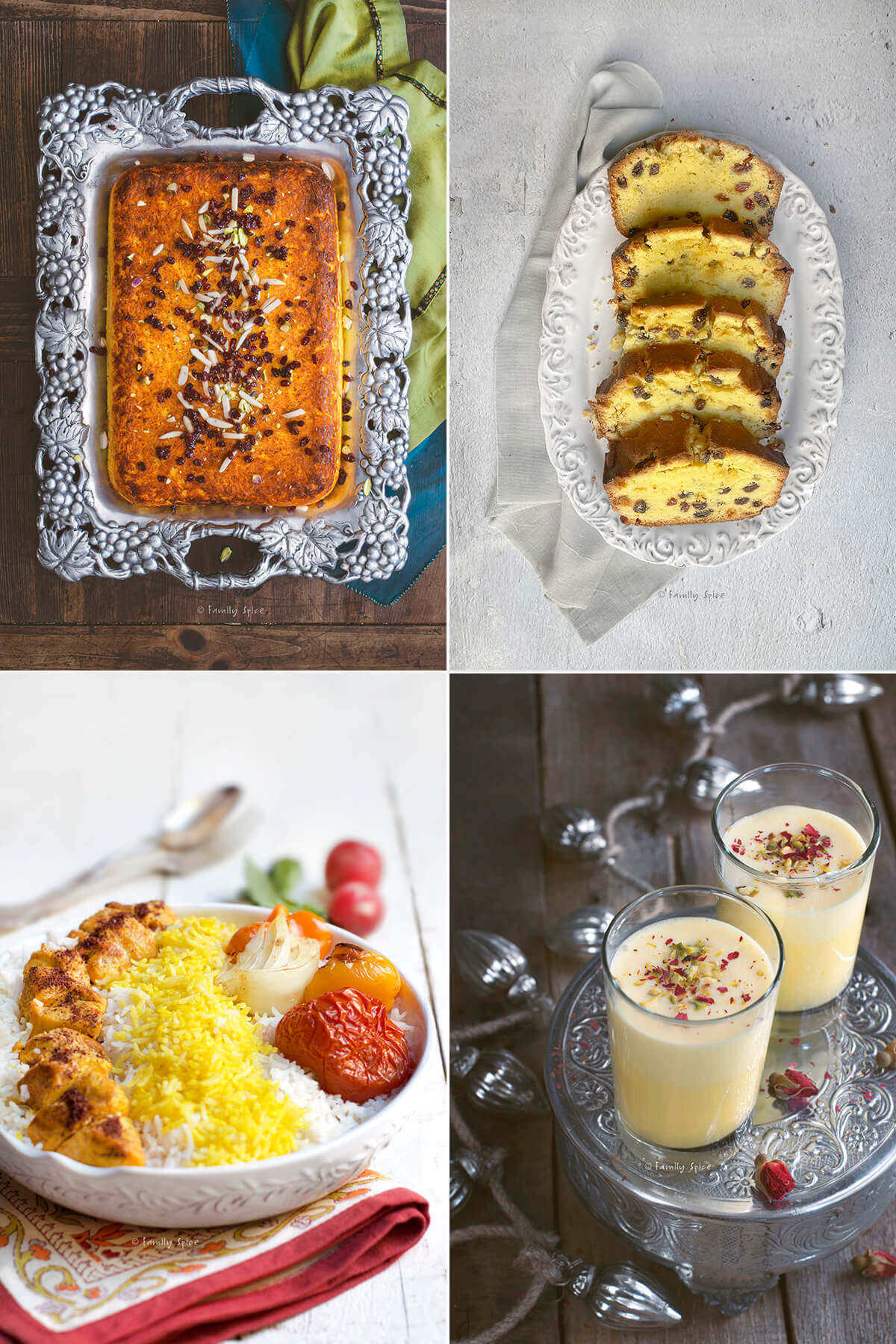
Now that you know how to choose, store, and use saffron, it’s time to put those beautiful red threads to work! Saffron adds distinctive flavor, aroma, and golden color to everything from Persian rice and chicken dishes to seafood, baked goods, and drinks.
Over the years, I’ve shared plenty of recipes featuring this special spice, including traditional Persian family favorites and a few fun twists. Here are some of my favorites to get you started.
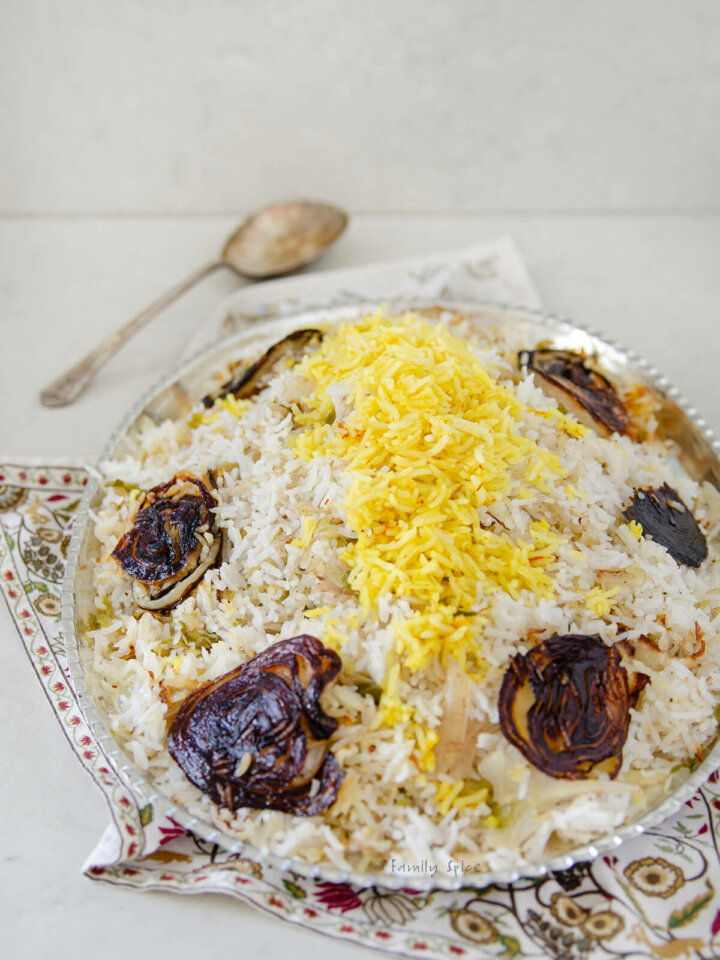
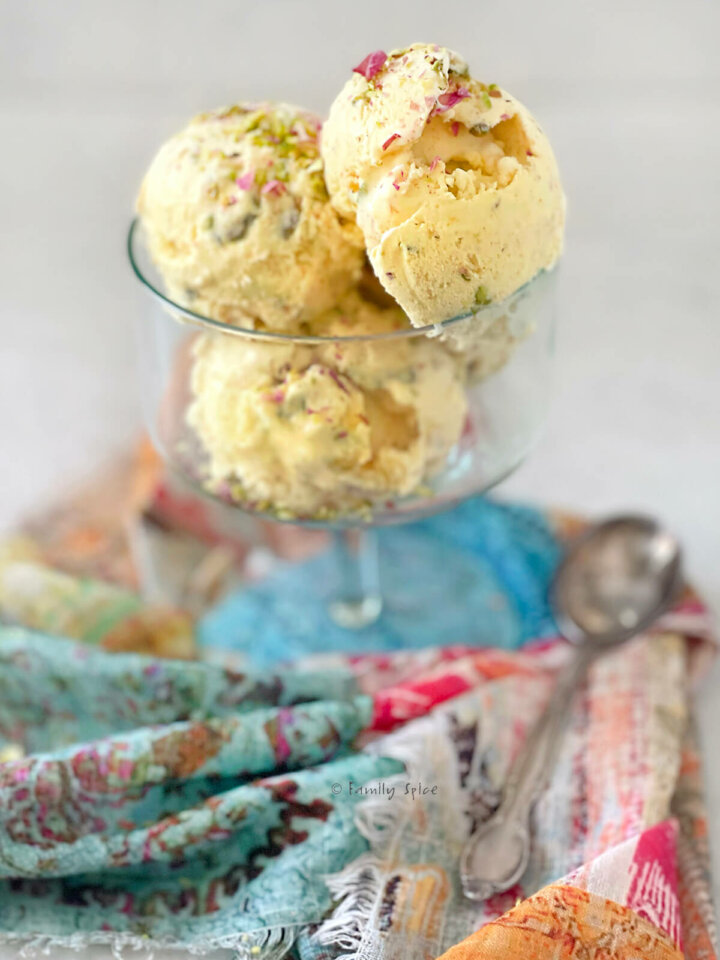
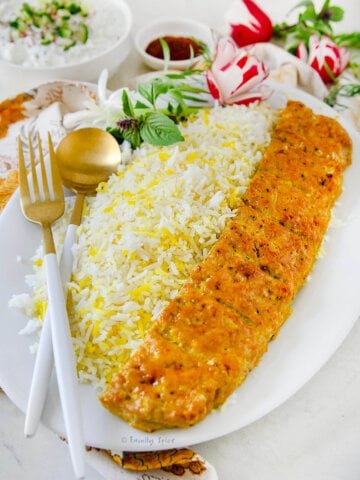
- Persian Recipes with Saffron: Some staples include tahchin (baked saffron rice cake), chicken kabob (jujeh kabab), Persian ice cream (bastani), and other traditional dishes.
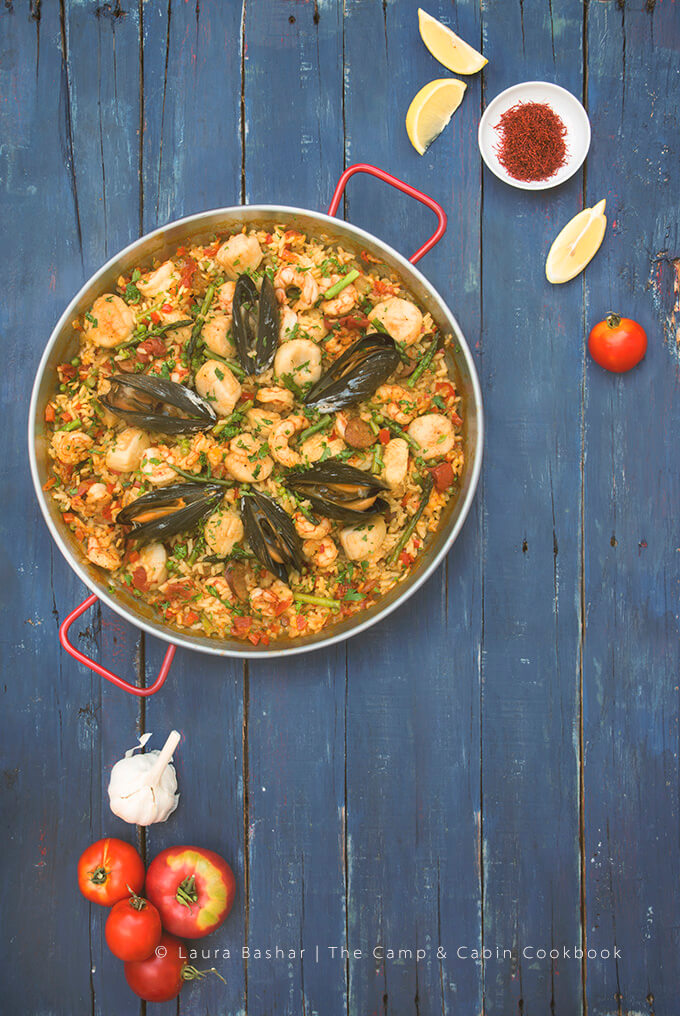
- Seafood Recipes with Saffron: Paella is a classic Spanish dish that features saffron. I have a delicious seafood paella recipe prepared over the campfire in my Camp & Cabin Cookbook. I also share my recipe for steamed mussels with lemon saffron broth in my first cookbook, Cooking Techniques & Recipes with Olive Oil.
- More Ways to Cook with Saffron: You can also make my saffron cake, saffron cookies, saffron drinks, and other recipes.
Now that you know how to choose, store, and use saffron, it’s time to put this amazing spice to work in your kitchen! From Persian favorites to other delicious dishes, there are plenty of ways to enjoy its unique flavor and aroma.
Browse all my saffron recipes for more delicious ways to cook and bake with this special spice.
Saffron is from the red stigmas inside the crocus flower which requires specific weather conditions for it to flourish. The crimson stigmas are hand-picked, collected and dried for distribution. Remember, each flower will produce only 3 threads of saffron. And it takes tens of thousands of flowers to produce a pound of dried saffron.
Saffron should be grounded in a mortar and pestle just prior to using it. Bloom, or steep, the crushed saffron in a little hot water and let it brew like tea for about 5-10 minutes. Then add this liquid to whatever you are cooking.
Saffron and turmeric are completely different spices and are NOT interchangeable. Saffron comes the stigma of the crocus flower while turmeric comes a root from the ginger family. Although they both turn your foods yellow, they have different flavor profiles and aromas.


PS If you try this recipe, why not leave a star rating in the recipe card right below and/or a review in the comment section further down the page? I always appreciate your feedback.
You can also follow me on Pinterest, Facebook or Instagram. Sign up for my eMail list, too!
Written by Laura Bashar
Hi, I’m Laura, a certified professional cook and cookbook author living in San Diego. I have been sharing my family’s favorite recipes inspired from all over the world since 2008. Let’s cook up something fun!
Hello, I send you my original french recipe, with saffron (published by « Taste of France ») that you can publish. Best regardsGilles DESCHAMPSTél. : 033 6 24 21 80 95https://tasteoffrancemag.com/recipes/ CROCUS OF NIMES If you’re looking to bring a little French flavour to your kitchen, we have plenty for you to choose from! Try your hand at a French classic or even some exotic French fusion cuisine. There is something for every skill level, so if you’re planning a dinner party or simply want a new weekday supper option we have great French recipes for you to taste.Working… Read more »
hi laura,Laura, you please tell me ,how to make saffron tea? thanks
Hi Mayra-
My understanding of saffron tea is that you can steep the saffron with other flavors, depending on your personal preference. You can add 5-10 strands of saffron to green or white tea. You can also steep the saffron with ginger, cinnamon stick, cardamom pods, or dried rose petals.
Laura
Thanks For Such A Nice Article Indeed saffron makes It better I My Self Is indian Based Saffonier.Can You Tell Me what Type Of Saffron It is Kashmiri saffron Or Persian Saffron??
Hey thanks for such an amazing article, first let me mention that you are amazing with your skills second thing i’m confuse in one condition i believe you can help me, and the question is :
How much saffron i have to use with kabob recipe ? I have this persian saffron packet https://www.acesaffron.com/buy-saffron/
Is it fine to use also mention it please
I have guest coming in my home i have to serve them
Thanks
Hi Alex,
Are you making chicken kabob? I have a recipe here that tells you exactly what you need: https://familyspice.com/persian-chicken-kabob. And for the rice with saffron, the recipe is here: https://familyspice.com/how-to-make-persian-basmati-rice-with-saffron-for-sundaysupper. You typically only need a pinch of high quality saffron for these recipes. Then I crush the threads in my mortar and pestle and add hot water.
Laura
Interesting !
I love saffron in Swedish Lucia Buns!! They are wonderful!
Excellent post, my favourite dish is the chicken kebab – over a charcoal fire of course ! One question, would you use Persian saffron in Paella or would you use Spanish saffron since it is a Spanish dish ? I would use a Persian saffron because I am biased but I am interested to know what you think of the difference between the two ?
I am thrilled to have stumble across your website while searching for healthy immune boosting smoothies to share with my daughter. I will pass it on. I have to tell you my family for generations on my fathers side have enjoyed a traditional recipe’ of Saffron stuffing. It would not be the same at Thanksgiving and Christmas without it. We are experiencing the next generation learning to make it and carry on the tradition. I don’t know how this recipe’ got started in my Grandmothers family, both grandma and Granddads families are of German decent. I am courious now and… Read more »
That’s wonderful! Welcome and I am definitely going to do another saffron giveaway this December!
I just noticed you live in San Diego…wow, what a coincidence. Lucky you! So far it’s my most favourite city I’ve been to in the States.
Just liked you on FB. I just bought some saffron last week when I was in San Diego (love that place). Things are so much cheaper in the U.S. compared to Canada. I wasn’t quite sure what to make with it but just today I happened upon this blog AND I found a recipe for scallop and saffron soup. Can’t wait to try it! 🙂
*cut down